
Categories
Alaska Community, Community Support, Home Maintenance, Local NewsPublished August 5, 2026
Southcentral Alaska Natural Gas Outlook for Winter 2026-27: What ENSTAR Customers Should Know

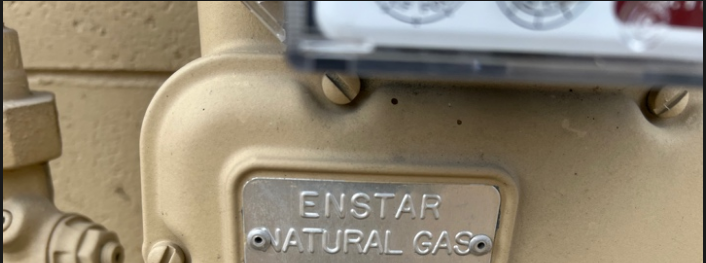
Southcentral Alaska is entering the 2026-27 winter season with a tighter natural gas supply outlook than residents and businesses are used to. ENSTAR has said it is working to secure additional gas and storage, but the margin for a cold winter is thin.
This is not a prediction that service will be interrupted. It is a practical reason to understand the risk, know how utilities would respond in an emergency, and take sensible steps to reduce waste at home and at work.
Why the supply outlook is tighter
For more than six decades, Cook Inlet gas has heated Southcentral homes, supported businesses, and generated much of the Railbelt's electricity. ENSTAR says Cook Inlet is still producing gas, but the remaining resource is becoming harder and more expensive to develop while demand for dependable energy remains high.
The immediate concern is not simply the total amount of gas available over a year. It is whether enough gas can be delivered and withdrawn from storage on the coldest days, when heating demand rises sharply. Storage helps utilities bank gas during lower-demand periods and draw it back quickly during winter peaks. After heavy withdrawals during the prior winter, ENSTAR and regional utilities have warned that rebuilding adequate storage inventory before cold weather is a challenge.
Supply risk is also tied to aging Cook Inlet fields, uncertain production from smaller suppliers, and the region's limited connection to alternative gas sources. Southcentral Alaska does not have the kind of broad, interconnected pipeline network that can readily bring in gas from multiple basins when local supply is constrained.
What happened with the proposed Kenai storage project
ENSTAR proposed developing the Kenai Loop Pool, a depleted reservoir near Kenai, as additional gas storage. The utility sought an advance finding from the Regulatory Commission of Alaska that the project would be prudent before committing major capital and financing.
On July 8, 2026, the commission denied that advance request and closed the docket. The commission said the record did not contain enough information to make the requested finding, citing unresolved questions about technical capability, timing, leasing, feasibility, and customer cost. The request was not denied because the storage project is a bad idea; the original request simply did not include enough information to evaluate it. ENSTAR subsequently sought reconsideration and has said it is evaluating other storage options.
That regulatory outcome matters because storage could help ENSTAR accept more seasonal production and, in the future, manage imported liquefied natural gas. It does not by itself determine whether customers will have service this winter, but it adds uncertainty to a system already operating with limited flexibility.
What a curtailment plan means
Utilities plan for severe contingencies so they can protect public safety and preserve service as long as possible. ENSTAR's tariff-based interruption framework is designed to reduce demand in stages if gas supply or pipeline pressure becomes inadequate.
- Interruptible customers would be curtailed first. These are customers whose service agreements allow interruption under specified conditions.
- Transportation load, including gas used by electric utilities, could be curtailed next. Electric utilities would be asked to maximize alternative generation where available, such as diesel-capable units or other resources.
- Gas-sales customer load would be the last stage. This is the most serious scenario and would follow only if earlier measures and available supply were insufficient.
Because natural gas supports both space heating and electricity generation in the region, a gas shortage can affect more than gas bills. If electric utilities must shift away from gas-fired generation, costs can rise. Where alternative generation is limited, utilities have warned that controlled, temporary power outages could be part of a worst-case response. Public safety and essential services are expected to receive priority protection under contingency planning.
Weather is a major variable. A milder winter reduces peak demand and pressure on storage. A prolonged cold period similar to last winter would increase the challenge. ENSTAR has said it is pursuing additional supply options and may ask customers to conserve gas if conditions warrant.
What customers can do now
Conservation cannot solve the region's supply challenge on its own, but reducing avoidable heat loss lowers household costs and helps reduce demand during peak periods. Start with measures that are safe, practical, and appropriate for your home or business.
- Seal air leaks. Check around doors, windows, cable penetrations, pipes, and dryer vents for gaps where heated air escapes.
- Use thermostat setbacks thoughtfully. ENSTAR recommends winter settings of 65 to 70 degrees when occupied. Avoid unsafe indoor temperatures, especially for children, older adults, pets, or vulnerable occupants.
- Schedule furnace maintenance. Have a qualified technician inspect the system before winter. Replace furnace filters regularly and keep vents and combustion-air pathways clear.
- Protect airflow. Keep baseboard heaters, air inlets, and outlets unobstructed so the heating system can operate as designed.
- Improve insulation where feasible. Attics, walls, floors, ducts in unconditioned spaces, and accessible pipe runs can be important sources of heat loss.
- Manage fireplace and water-heater losses. Keep the fireplace flue closed when it is not in use, and consider setting the water heater to 129 degrees or lower if appropriate for your household and equipment.
- Ask about weatherization assistance. ENSTAR lists weatherization resources through Alaska Housing Finance Corporation, RurAL CAP, and Cook Inlet Housing Authority for qualifying residents.
Stay informed, prepare without panic
The right response is preparation, not alarm. Follow updates from ENSTAR, your electric utility, and the Regulatory Commission of Alaska. If utilities issue a conservation request during a cold spell, small actions taken across many homes and businesses can help reduce peak demand. Businesses with interruptible service or backup-generation capability should review their own contingency procedures now.
Southcentral Alaska's longer-term energy solution will require dependable supply, adequate storage, regulatory decisions, and infrastructure investment. For the 2026-27 winter, customers can help by using energy efficiently, maintaining heating equipment, and staying attentive to official utility communications.
Sources
- ENSTAR, Cook Inlet Natural Gas Supply
- ENSTAR, Energy Conservation
- Alaska's News Source, July 13, 2026, RCA denial of advance approval for Kenai storage project
- Alaska Public Media, July 24, 2026, ENSTAR appeal regarding storage
- Alaska Beacon, July 28, 2026, Southcentral utility supply concerns
- Mat-Su Sentinel, July 29, 2026, worst-case electric utility contingency planning
- Alaska Superior Court filing describing ENSTAR's tariff-based interruption sequence
This article is for general informational purposes and reflects publicly available information as of August 4, 2026. For service, safety, or emergency instructions, rely on direct communications from ENSTAR and local utilities.

Nani Palmer
Realtor® | Co-Owner | Les Bailey & Associates | Keller Williams Alaska Group | PLACE
or another way