
Categories
Homeowner Tips, Home Maintenance, PlumbingPublished June 16, 2026
What Not to Flush Down a Toilet or Put Down a Sink

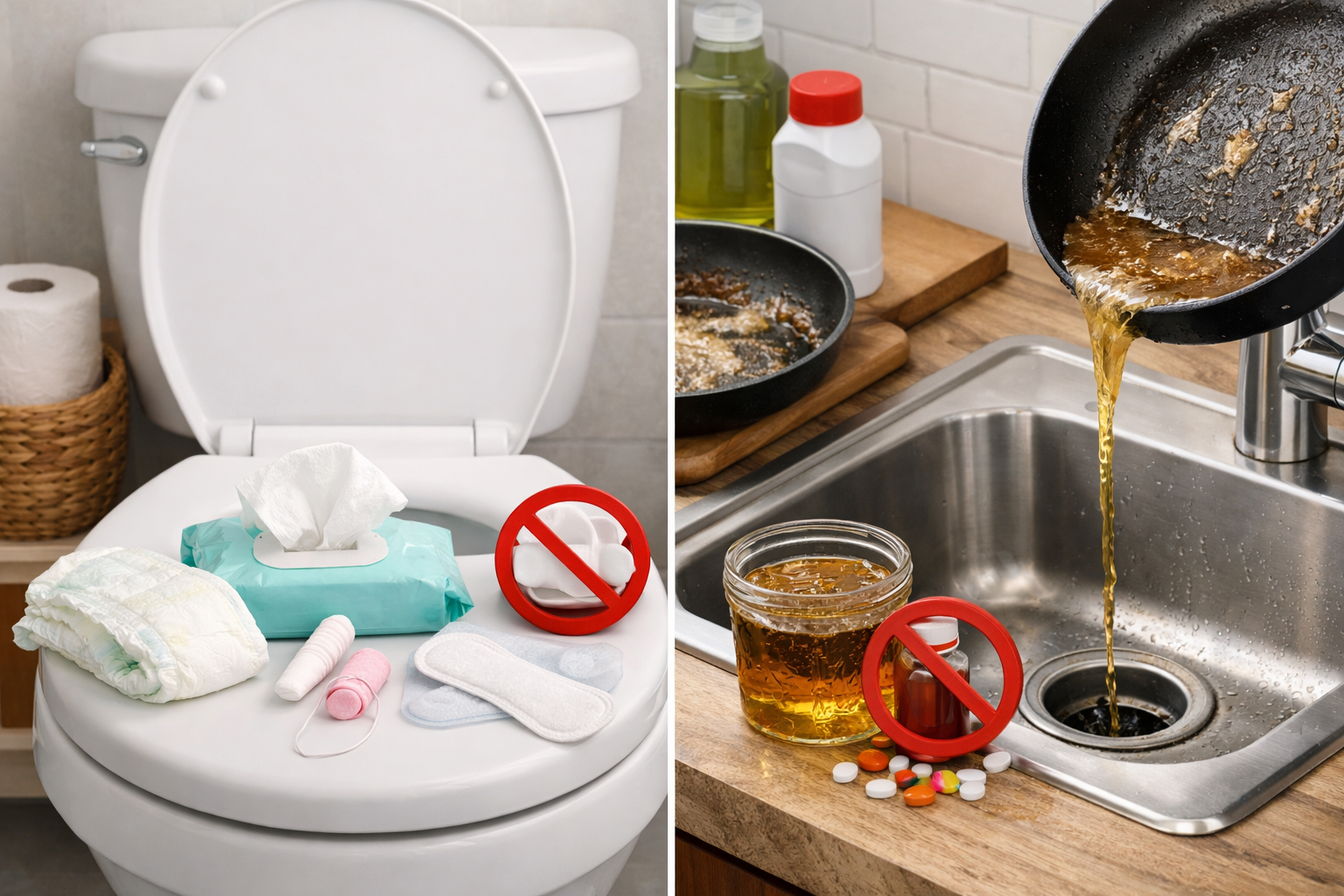
Most plumbing problems do not start with a major break. They start with everyday habits, such as flushing a wipe, rinsing grease down the drain, or pouring medication into a sink without a second thought. According to Anchorage Water and Wastewater Utility, toilets are meant for just three things: pee, poop, and toilet paper. Everything else increases the risk of clogs, sewer backups, overflows, equipment damage, and avoidable repair costs.
Your Toilet Is Not a Trash Can
AWWU's guidance is simple: if it does not come off a roll, it does not belong in the bowl. Even products labeled flushable or sewer safe can clog sewer lines and damage wastewater systems. Wipes do not break down the same way toilet paper does, which means they can create blockages in your home plumbing, public sewer lines, and treatment facilities.
Items that should not be flushed include:
- Baby wipes
- Sanitary wipes
- Household cleaning wipes
- "Flushable" wipes
- Diapers
- Sanitary napkins
- Paper towels
- Newspapers
- Soiled rags
- Shop rags
Improper flushing can do more than cause a nuisance. It can lead to costly emergency repairs, health hazards from sewage exposure, and even code violations.
What Should Never Go Down the Sink
Kitchen and bathroom sinks may seem convenient, but they are not a safe disposal route for many common household materials. AWWU identifies fats, oils, and grease, often called FOG, as the number one cause of sewer overflows. When hot grease or oily residue goes down the drain, it cools, solidifies, and sticks to pipe walls. Over time, that buildup traps other debris and can block the line entirely.
That means you should never pour these down the sink or disposal:
- Bacon grease
- Cooking oil
- Meat drippings
- Butter or shortening
- Sauces, dressings, and oily food residue
- Any other fats, oils, or grease
AWWU recommends scraping plates and wiping pans before washing them, then putting grease into a container to cool and tossing it in the garbage. For larger amounts, follow local disposal guidance.
Do Not Pour Chemicals or Medications Down the Drain
Some items do not clog pipes right away but still create serious problems once they enter the wastewater system. Used oil, oil-based paints, solvents, antifreeze, and other chemicals should not go down sewer lines, storm drains, or drainage ditches. These substances can damage infrastructure and harm the environment.
The same goes for medications and personal care products. AWWU warns that wastewater treatment processes cannot remove all medications flushed or rinsed down the drain. Unused medications should not be flushed or poured into a sink.
Better Habits That Protect Your Plumbing
The good news is that preventing backups is usually simple. AWWU recommends a few practical habits:
- Flush only pee, poop, and toilet paper
- Throw wipes, hygiene products, and trash in a wastebasket
- Scrape and dry-wipe dishes before washing
- Collect grease in a container instead of rinsing it away
- Use approved disposal options for oil, antifreeze, chemicals, and medications
- Use natural drain maintenance methods when appropriate instead of creating buildup with improper waste disposal
Small Choices, Expensive Consequences
What goes down your drains does not just disappear. It travels through your home's plumbing and into a larger public system that serves the whole community. Sewer backups and overflows are messy, costly, and can expose people to disease-causing microorganisms. Keeping the wrong items out of toilets and sinks protects your pipes, helps prevent emergency repairs, and supports a healthier wastewater system for everyone.

Nani Palmer
Realtor® | Co-Owner | Les Bailey & Associates | Keller Williams Alaska Group | PLACE
or another way